
Elon The Ponzi Human
How Finance Lost Touch with the Real World?


I will be posting this piece on Life Canvas, First Followers and Impact Design (+) Experiences.
“We have a term for enterprises that look successful because they keep drawing in new investors and keep drawing in new investors because they look successful. They’re called Ponzi schemes. And Elon Musk is basically a human Ponzi scheme.” Elon Musk, Human Ponzi Scheme by Paul Krugman, Nobel Laureate
What Is Finance, Really?
Let me start by defining finance from its roots. Finance, at its core, is the art and science of allocating capital to productive use over time. It emerged thousands of years ago when a farmer borrowed grain in the spring to plant, repaid with interest after the harvest. That simple transaction — lending against real-world inputs (land, labor, seeds) to generate real-world outputs (food, cloth, shelter) — is the original soul of finance. That’s finance 101, it is nothing evil about it, or at least it shouldn’t be evil, it is up to us to define the rules of finance.
The word itself comes from the Old French finer, meaning to settle a debt. But deeper than etymology, finance was always meant to be the bridge between present sacrifice and future value creation. Whether it was a maritime loan for a ship in ancient Greece, a Medici bank financing a wool workshop in Renaissance Florence, or a municipal bond for a bridge in the 19th century — finance served the real economy. It did not rule it.
The stock market, born in Amsterdam in 1602, was originally a mechanism to fund voyages, warehouses, and trading posts — tangible, productive assets. Shareholders earned dividends from actual trade profits, not from flipping shares to a greater fool. That distinction matters: real finance funds the building of things. Speculation bets on the price of the bet.
Somewhere along the way, we forgot that distinction. Or worse — we deliberately erased it. It is getting worse day by day, I always say don’t hate the system, hate the human greed and ego, finance is not good or bad, it is a tool, we humans have made it almost worse tool to kill humanity.

The Great Divorce
“Isn’t it that finance started getting more and more disconnected from the real-world inputs and outputs, and instead started financing wrappers to have hyper returns for a few without creating value for the real world? The role of a business is to create value by doing business, not just shareholder value by pumping it up on the stock market — because then it is just mere speculation. So how is that real finance?”
I have been wondering about this question for a while as it cuts to the heart of what ails modern capitalism, and makes it feel evil and dark. My suspicion that finance has cannibalized its own roots is not just me as a grumbling man, who was once anti-capitalist hater activist but it is a thesis now backed by hard data on wage stagnation, valuation metrics and historical precedent.
The Wall Street
We are living through the "Great Divorce": the decoupling of the stock market from the productive, real-world economy. When the Price-to-Earnings (PE) ratio rises historically high, the real-world disconnect happens. And right now, that disconnect is threatening to send net real value creation "into the toilet."
In the race between labor and capital, capital is lapping the field. Last year, real wages — the actual purchasing power of the average American worker — fell by 0.3% in a single month, reversing years of hard-won gains . Meanwhile, those sitting on assets saw a windfall. If you had your money in the S&P 500, you enjoyed an 18% return . To put that in human terms: the passive return on a portfolio of $50,000 generated more income last year than the annual raise of a median worker . This is the definition of value extraction over value creation.
Worse, this isn’t a blip; it is a structural collapse of market breadth. In early 2026, Goldman Sachs issued a warning that market concentration has hit levels “not seen in 25 years” — specifically, not since the eve of the dot-com crash . Forty percent of all S&P 500 earnings growth is now attributed to a single theme (Artificial Intelligence) concentrated in about a dozen names . That is not a healthy economy; that is a “fragility signal.”
The wolf of wall street is not what real finance should be anyway. It feels like we are being asked to swallow a pill without even understanding the basics. Again, finance is just a tool, hate the greed and ego, not the tool.
The Collapse of Private Markets
But the disconnect is not just on Wall Street. The same paranoia and speculation have now fully infected private markets as well.
If you are not an over-financialized, hyper-scale, blitzscaling propaganda wrapper of a unicorn, it is impossible to get equity funding for small businesses today. I see it everywhere. A local manufacturing business in Finland, a sustainable agriculture co-op in Netherlands, a small engineering firm in Japan — these businesses create real value. They employ people. They build physical things. They pay real wages. They deliver value. And yet private capital markets have abandoned them completely.
Why? Because venture capital and private equity have decided that the only game worth playing is the “exit” game — the IPO, the SPAC, the acquisition by a larger wrapper. The business itself is no longer the point. The business is just the vehicle for a financial transaction later. So if you are not growing at 10x per year in pure software metrics — user acquisition, hype cycles, narrative virality — you are invisible to private capital. It is just bonkers that we have reached this stage, as a private markets impact investor, it is disheartening to see the disconnect.
This is a total collapse of the original purpose of private markets. Private markets were supposed to fill the gap where public markets could not reach — funding small, innovative, local, or patient-capital businesses. Instead, they have become a mirror image of public markets: speculative, concentrated, and disconnected.
The result? Real businesses with real assets, IP, products, value — even in Nordics, Japan, and China — get systematically discounted because they are not in the US hype machine. A profitable small factory in Turku with a 10-20% annual return cannot raise a dime. A money-losing AI wrapper in San Francisco with a 300-page pitch deck raises $200 million. That is not allocation. That is hallucination. I don’t mean to say AI is useless, it is a great productivity tool, even this opinion piece, I used a lot of resources that I scanned using different LLM models.
Retail Investors Join the Casino
And then you look at the retail side — the individual investors who have been locked out of productive finance for decades. Where are they putting their money now? Not into productive assets. Their were times, we were hearing about the rise of P2P lending to small business owners, but those financial products dwarf in comparison to the hyper-scaled gambling products. People are moving more and more money into over-sophisticated gambling financial products.
Cryptocurrencies. Prediction markets. Meme stocks. Zero-day options. You name it.
Again — none of this has any real productive value creation. A Bitcoin does not build a house, nor does it generates revenue and solve much of financial rails, that originally promised with DeFi - again, it could do that but the market cap and the valuation disconnect from the real value creation is BONKERS. These are pure wrappers: financial instruments whose only underlying asset is the belief that someone else will pay more for them later.
I am not moralizing against gambling, even though as an impact investor, this is the last thing that should be even legal. People can do what they want with their money. But we must stop calling this finance. It is not finance. It is a casino with a Bloomberg terminal. Like literally - whether it is coingecko.com or polymarket.com.
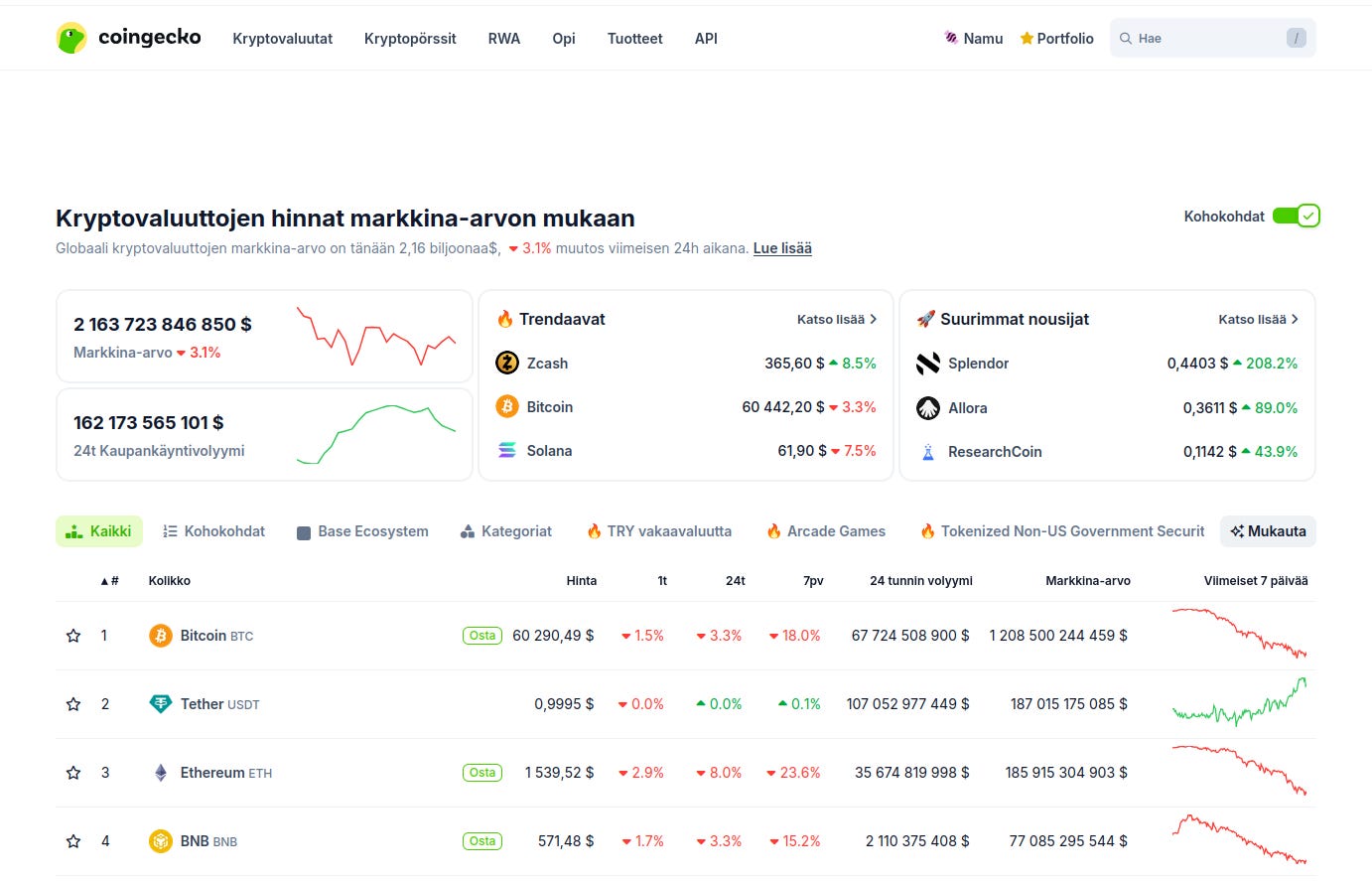
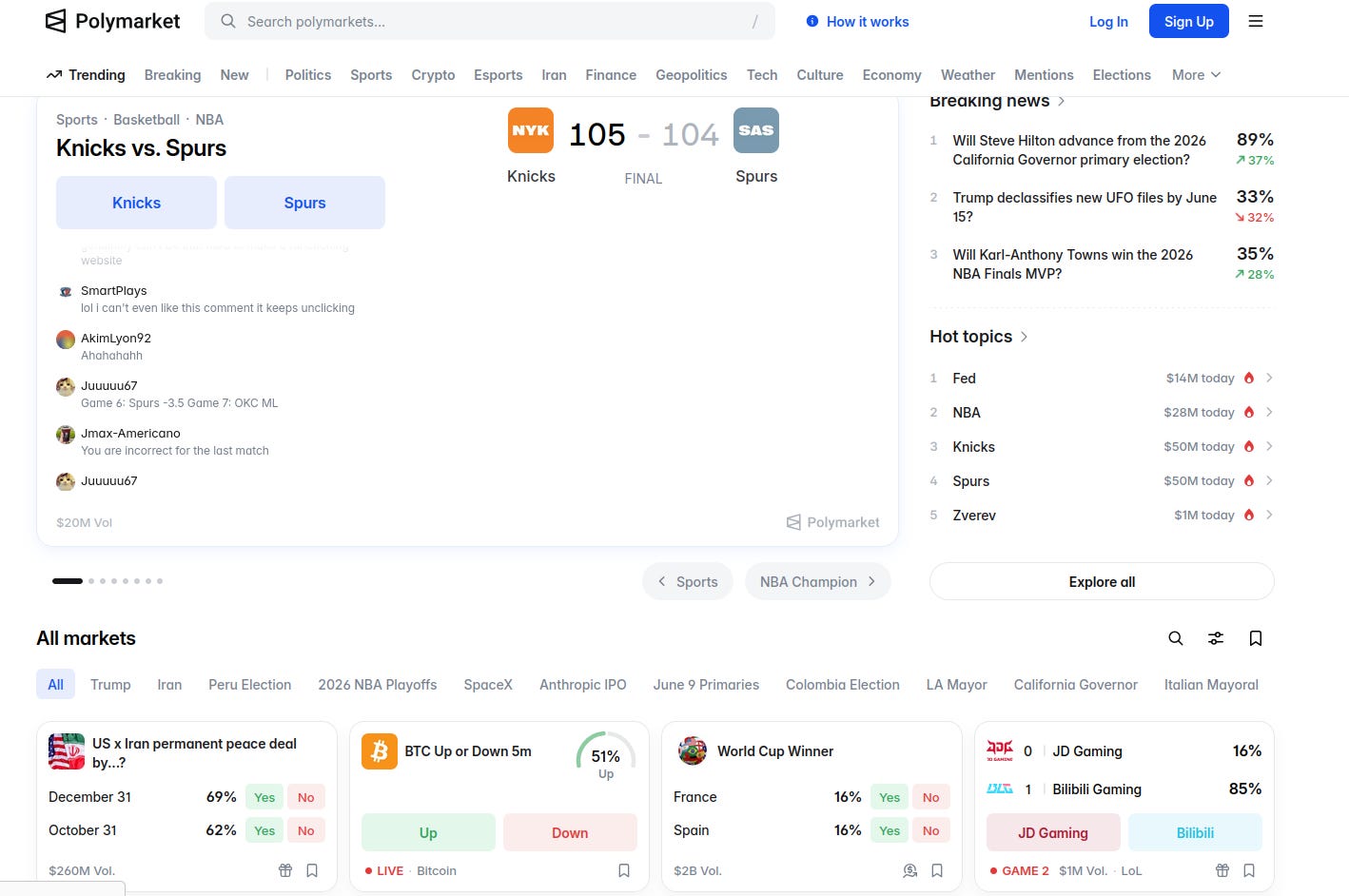
And the tragedy is that this casino is siphoning capital away from the real economy. Every dollar thrown into a speculative crypto token or a prediction market contract is a dollar not lent to a small business, not invested in a local farm, not used to retrofit a building for energy efficiency. The opportunity cost is staggering. It is sad to see that no one talks about real world finance, we desperately need to humanize finance and also make it focus on real world assets, stripping from overfinancialised wrappers.
Finance a Pyramid Scheme
The whole financial world has become a pyramid scheme.
Think about it. A pyramid scheme works like this: early investors are paid returns not from underlying value creation, but from the capital of later investors. The system requires perpetual growth of new money entering the top. When the flow stops, the whole thing collapses.
Now look at modern finance:
Stock buybacks funded by cheap debt, juicing P/E ratios without any increase in productive output.
Venture capital funding rounds where the “valuation” is not based on cash flow but on the last investor’s willingness to roll the dice.
Cryptocurrencies with no yield, no earnings, no underlying assets — just the greater fool theory.
US Treasuries backed not by gold or silver but by the assumption that the pyramid of US dollar dominance will never end.
And at the center of it all is US dollar dominance. The United States runs the world’s reserve currency. That means every central bank, every sovereign wealth fund, every institutional investor on the planet must hold dollars. And where do those dollars flow? Into US public markets. Into US private markets. Into the wrappers.
So everyone else — Europe, Japan, China, the Global South — is funneling their real savings into the US pyramid scheme. They sell real goods, manufacture real products, do real labor — and in return, they hold dollar-denominated financial wrappers that produce nothing. That is not global finance. That is global extraction.
US Exceptionalism Is the Problem
I see so many technologies and real-world assets in Noridcs, Japan, and China get systematically discounted simply because they are not in the US. A German battery startup with a working prototype cannot get a US valuation. A Japanese robotics firm with twenty years of steady profits trades at a fraction of a US AI wrapper with no revenue.
This is US exceptionalism as a financial pathology. The belief that only American-style hyper-scaled, blitzscaling, venture-backed speculation counts as “innovation” has distorted global capital allocation. Real value — patient, local, productive, tangible — is punished. Speculative wrappers — fast, narrative-driven, unmoored — are rewarded.
Why? Because the US controls the global financial plumbing. The dollar is the pyramid’s top. Everyone else is a lower tier, forced to accept worse terms, lower valuations, and higher costs of capital.
Robert Reich said SpaceX IPO "could turn out to be the universe's largest Ponzi scheme, and you and I are paying part of the price." That is not finance. That is a pyramid with a rocket on the logo.
Dismantling the Pyramid — Decentralizing Finance Back to Its Roots
So what is the alternative?
We need to decentralize finance. And by doing that, we make it more back to its original roots: financing to build a better and local future, economies that are not tied to ponzi schemes.
I do not mean “decentralize” in the crypto bro sense — more tokens, more blockchains, more speculation. I mean decentralize in the real sense: disperse capital allocation away from New York, away from Silicon Valley, away from the handful of gatekeepers who decide what is “investable.”
What does that look like?
First, local banking resurgence. Community banks, credit unions, cooperative lenders — institutions that know the businesses on their Main Street because they can see them from their windows. These are not speculative. They are not global. They are rooted. They lend to the bakery, the hardware store, the small manufacturer. That is real finance.
Second, patient capital vehicles. Not every business needs to grow 10x in five years. Some businesses just need to be profitable, stable, and good for their community. We need investment structures that reward patience — longer lockups, lower return expectations, higher tolerance for real-world risk (a machine breaking, a crop failing) over financial risk (a valuation markdown).
Third, regional and national development banks that break US dollar dependency. Europe needs to lend in euros for European infrastructure. Japan needs to lend in yen for Japanese reindustrialization. China needs to lend in renminbi for Belt and Road real assets — not dollar-denominated wrappers. Currency sovereignty is the first step to financial sanity.
Fourth, regulatory dismantling of speculative wrappers. Tax short-term capital gains at punitive rates. Ban zero-day options for retail. Treat crypto like the casino it is — with disclosure, limits, and no bailouts. Remove the implicit government guarantee that backstops every financial innovation that is “too big to fail.”
Fifth — and most radically — we need to revalue the real. A P/E ratio should mean something. A wage should mean something. A factory, a farm, a bridge, a school — these should be the collateral of the financial system, not a derivative on a derivative on a narrative.
What are we doing?
Finance was supposed to be the servant of the real economy. Somewhere along the way, it became the master. And now it is a parasite — feeding on the productive body of the world, producing nothing but wrappers, narratives, and hyper returns for the few.
The pyramid will not last forever. They never do. When it collapses — and it will — the real world will still be here. The farms, the factories, the bridges, the people doing real work. They will survive. The wrappers will vanish.
The question is whether we have the courage to dismantle the pyramid ourselves, before it falls on all of us.
I think we should. I think we can. And I think the roots of finance — real finance, honest finance — are still there in the ground, waiting for us to return to them.
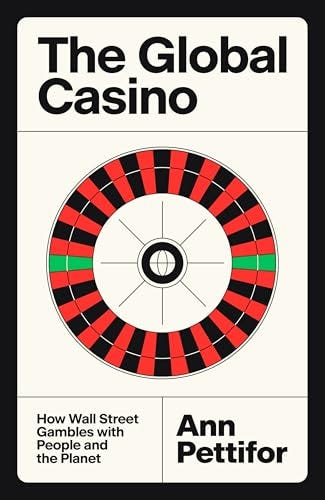
I highly recommend you pick up the book = The Global Casino by Ann Pettifor. From the price of food to the devastation of climate change, what is the cost of the global financial system?
Who am I?
Nobody.
And that is everything.
I want to leave you with something about the Chinese way.
“Completeness triggers declining and humility invites progress.”
To exchange notes or explore how we might build a more conscious financial future together, you can reach me at sagar.tandon@proton.me. Let’s build something that lasts, maybe compound impact for eternity.
I am trying to push the boundaries for us to ReThink, you can read all my relevant pieces here.
 | A guest post by
|