
Business for Peace
Dr. Tilman Bauer

Helsinki Partners invited me to experience Helsinki, Finland, as a 90-day Finn. I experienced many highs and learnings during this trip, which I will keep forever. The last few weeks were crazy busy, so I couldn’t share anything last month. Apologies for the pause I took.
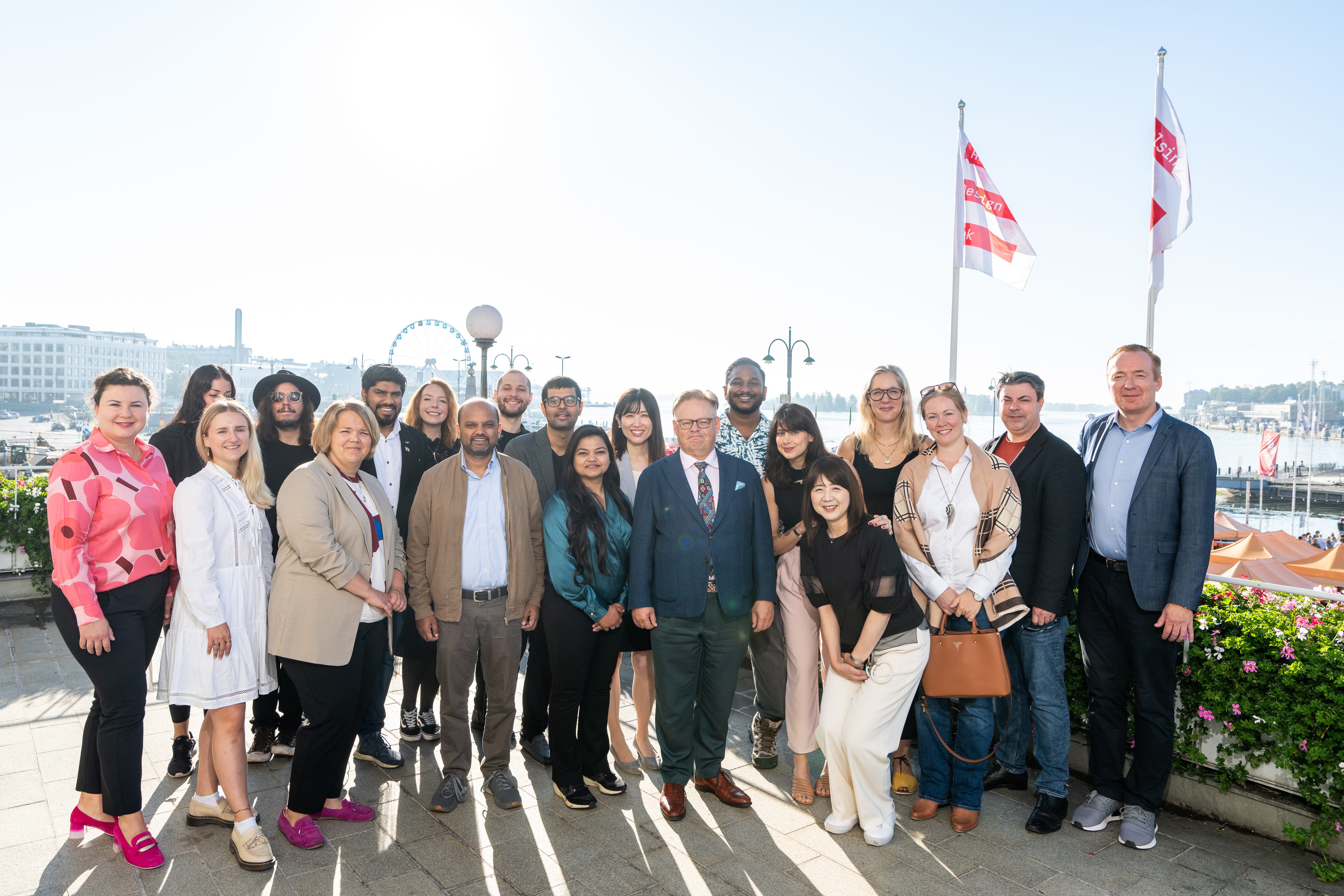
I never dreamt of coming here, but I had an itch to learn more about the Nordics, and I have been digging for information about the Nordics for the last 18 months or so. What attracted me was Finns's nature, life philosophy, and underdog personality. I used to own a website domain, “Underdogs.” I have been obsessed with underdogs' mentality and approach to investing, whether value investing, investing in underappreciated geographies, female founders, boring businesses, or backing talent as a first follower. My whole life is revolved around that. I consider myself an underdog and always want to remain like that so I don’t get covered with noise, dirt, ego, and pride. There is beauty in being a hidden gem. That is precisely how I feel about Finns.
Many people joined the 90-day Finn program to experience Finland, and I came to Finland to find my home, my people, and the culture I can relate to the most. It is a perfect blend of Eastern and Western philosophy, where most are unconsciously living a Taoist / stoic life, where men spend more time taking care of kids, a balance between the feminine & masculine sides (yin & yang), and a balance between individualism and being part of the community.
In Finnish, the word Kotona means a feeling of home. I feel Zen in Finland (what is the word for Zen in Finnish?). I know my Kotimaa (where our roots are - our family, ethnicity, nationality, and the identity we were born with). I think Finland is my Kotona.
“There can be no successful business in an unsuccessful society, and there can be no successful society without successful business. Properity requires Peace.”
- Nepalese National Business Initiative
During my time in Helsinki, I spent some time with Dr. Tilman Bauer, a Finnish-German researcher & philosopher who has done his PhD. on Business for Peace. He is the founder of peace.fi. He kindly gave me his thesis book “Business for Peace: A New Paradigm for Making a Collective Living.” I found the topic extremely close to my heart as I have been proactively writing, thinking, and philosophizing about conscious capitalism as a practitioner of ethical & intentional capitalism. I used to be a reluctant capitalist, but now I see capitalism as a way to create peace & impact. Dr. Tilman argues that the purpose of business is to create net positive peace in this world, and by peace, he doesn’t only mean “no war,” but peace is beyond that. Dr. Tilman defines Peace as the substance of any positive impact. Dr. Tilman has defined peace as weak, strong, and holistic peace and has also devised a framework that he has codified into the Business Peace Index (BPI), which can help companies realize their potential as a force for peace.

In my honest opinion, I believe this can be a great framework that speaks one global language on impact and can create a net positive impact. With Dr. Tilman, I want to work towards building financial instruments and tools that can help operationalize his fantastic work around the Business Peace Index. If done right, I believe this can revolutionize how we finance companies.

As Dr. Tilman rightly argues, the primary purpose of business is not just to optimize shareholder returns but also to optimize for more (net) peace. I agree that Dr. Tilman is right; his work made me question Milton Friedman's and my thoughts on shareholder maximization or profit maximization. I have a counterargument to Milton as an intentional capitalist. I think profit or shareholder maximization is an outcome, and when we try to optimize the outcome, we are thinking from a very short-term perspective. If we optimize the business for peace, we could achieve higher profit maximization because peace maximization takes care of the profits and the well-being of society and planet Earth. The well-being of society should ideally lead to better and resilient free cash flow and profitability with lower risk than capitalism, which is short-sighted. I don’t have proof that peace maximization leads to profit maximization, but there is no proof that peace maximization won’t lead to profit maximization. But in theory, I firmly believe in peace maximization. Prove me otherwise!
“The Purpose of Business is Peace: to generate peace, to foster peace, and to contribute to all levels of peace - and to be profitable simultaneously. Yet, profits are not the purpose of business. They are a nice side effect, a corroborating enabler of business.” - Dr. Tilman Bauer.
Finland's approach to business, emphasizing trust and happiness, appears to offer a model for creating businesses that promote, generate, and foster peace. This insight became apparent after I encountered Dr. Tilman and read his thesis.
Thank you, Helsinki Partners, and special thanks to Tian, who connected me with Tilman.
Lastly, I want to share four more resources »
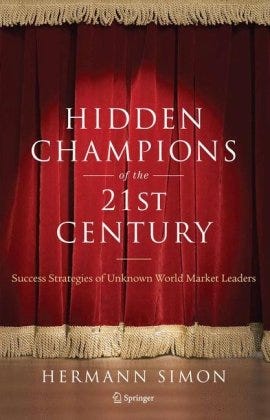
Hidden Champions of the Twenty-First Century: The Success Strategies of Unknown World Market Leaders, by Hermann Simon
“One CEO, for instance, regularly writes personal letters to the spouses of all employees who have to travel a lot and thus are away from home much of the time. Another sends a gift to families when an employee has contributed to the company in an extraordinary way.”
- Lessons from Germany’s Midsize Giants by Hermann Simon
Shinise
Shinise

As a YouTube addict, I've frequently encountered the "Shinise" videos. A term that refers to traditional, longstanding businesses in Japan. These businesses often span generations and have preserved their cultural heritage, craftsmanship, and business practices for decades or even centuries. Shinise are not just commercial enterprises but cultural symbols reflecting Japanese society's deep-rooted traditions and values.
Reluctant Capitalist
Reluctant Capitalist

One of the most influential books I have read on conscious capitalism is by Yvon Chouinard on his journey as a responsible and reluctant businessman who started Patagonia to express his passion for nature, climbing, and sustainability. The books that I had a tremendous impact on me are
If you are building something in the Nordics or Japan, I would love to learn more from you. Please reach out to me at nobody@firstfollowers.co.
Stay weird,
“Nobody”